FLOWTRIQ VS CLOUDFLARE VS RADWARE: A MARKETING-FOCUSED COMPETITIVE ANALYSIS
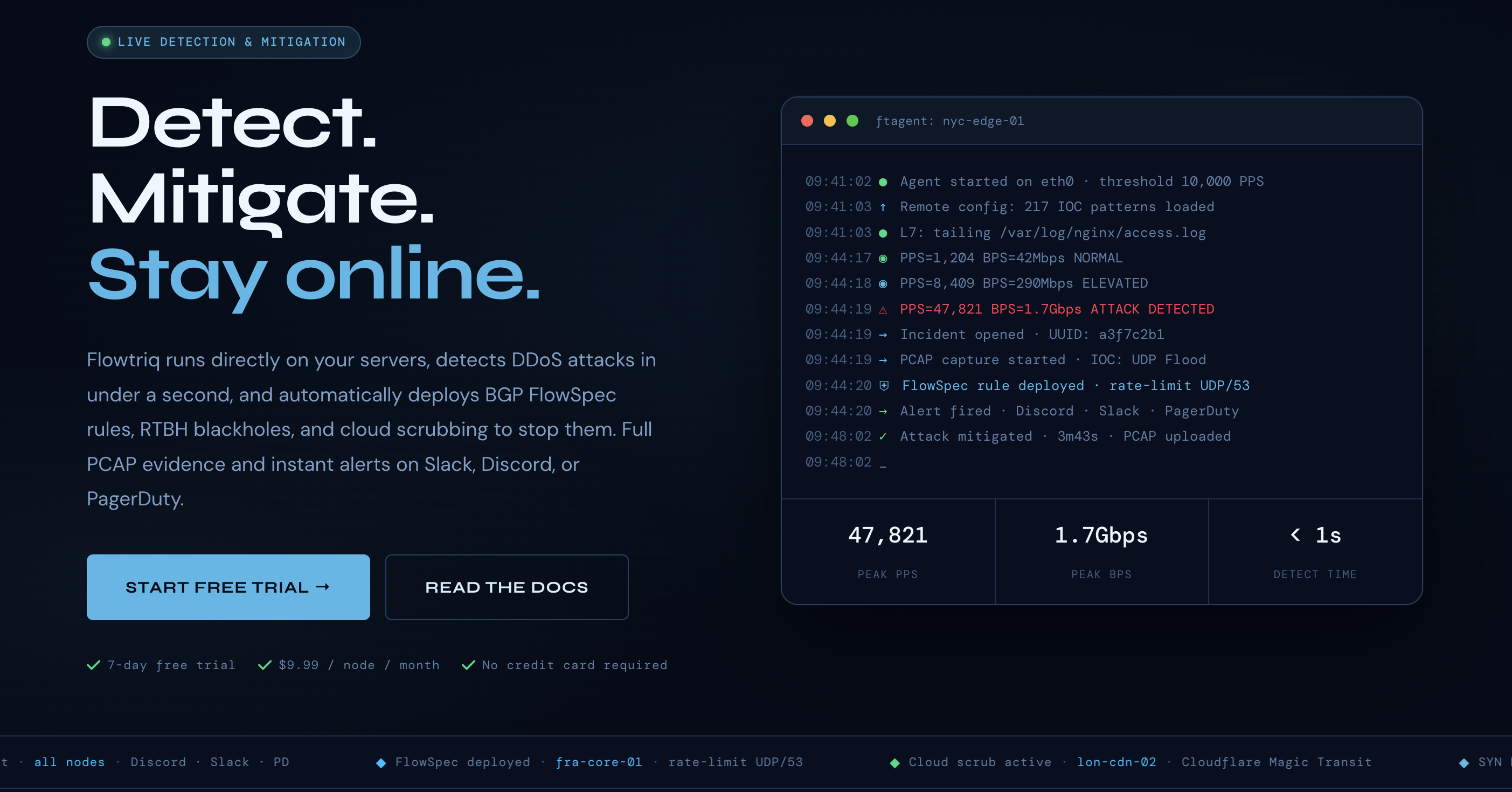
"When light-footed detection beats blunt-force scrubbing Flowtriq bills itself as a sub-second, agent-first DDoS detector that auto-mitigates from the serv..."
TYPE
SECURITY
POWER
+9999
RARITY
★★★★★
DATE
FEB 5
DDoS mitigation isn't a checkbox — it's a battleground. If your stack can't stop an attack before your sales page blinks, you're losing customers, not just packets.
⚡When light-footed detection beats blunt-force scrubbing
Flowtriq bills itself as a sub-second, agent-first DDoS detector that auto-mitigates from the server level. As someone who’s seen marketing teams scramble through multiple outage postmortems, I appreciate tools that reduce noise and give clear customer-facing signals (status pages, PCAPs for postmortems). Flowtriq is built for ops teams at hosts, ISPs, game studios and SaaS shops that need fast, automatic action without the overhead of enterprise appliances. Below I break it down against two heavy hitters in the space so you can pick what actually moves the needle for your marketing and uptime messaging.
⚡Quick Comparison Table
| Feature | Flowtriq | Cloudflare | Radware |
|---|---|---|---|
| Pricing | $9.99/node/mo ($7.99 annual) — flat, no traffic surcharges | Enterprise/Magic Transit: custom, traffic/feature-based | Enterprise pricing; appliance + service model, custom |
| Ease of Use | Agent installs in <2 mins, learns baseline automatically | Cloud-based edge — easy to enable, but Magic Transit routing needs network changes | High-touch: appliances, integrations, managed services |
| Marketing Features | Status pages, attack notifications, automatic PCAP capture for comms | Rich analytics, CDN + WAF, Bot Management, customer-facing performance wins | Focused on security SLAs and forensics; fewer built-in marketing features |
| Integration Options | BGP FlowSpec, RTBH, Cloud scrubbing (Cloudflare, OVH, Hetzner), webhooks | Full Cloud ecosystem (CDN, WAF, stream analytics), APIs | On-prem appliances, cloud scrubbing partners, APIs, managed services |
⚡Where Flowtriq Wins
- →Speed and simplicity for small-to-mid infra teams. The ftagent installs on a Linux box in minutes and starts detecting at packet level — if you run game servers or small hosting clusters, that agent-first approach beats waiting on cloud routing changes with Cloudflare Magic Transit or shipping hardware like Radware.
- →Predictable pricing that marketing loves. $9.99/node/month with no traffic surcharges is refreshingly simple when you’re budgeting for customer-facing SLAs and status pages. Compare that to opaque traffic-based enterprise tiers — it’s easier to justify to finance and ops.
- →Forensics and comms that help marketers sleep. Automatic PCAP capture on every attack + immutable audit logs = precise postmortems and crisp public incident reports. Flowtriq’s built-in status pages and multi-channel alerts map directly to the “tell customers what happened and what we’re doing” playbooks I recommend in Scale Yeti’s incident comms guides.
⚡Where Competitors Have an Edge
- →Bigger ecosystem & marketing hooks: Cloudflare bundles CDN, WAF, bot management, and analytics that marketers can wave around — faster page loads, fewer false positives, plus brandable performance wins. If you want a single vendor that improves both security and conversion metrics, they’re hard to beat.
- →Enterprise-grade SLAs and hardware-level options: Radware (and similar incumbents) offer deep packet inspection appliances, carrier-grade scrubbing centers, and long-standing enterprise relationships — useful for regulated industries that demand hardware-based guarantees.
For unbiased reads on tradeoffs, check reviews on G2 and industry analyst notes for each vendor — they’ll show the usual speed-vs-scale tradeoffs in practice.
⚡Best Use Cases for Marketing
- →Choose Flowtriq when you’re a hosting provider, game host, SaaS with distributed edge nodes, or a small ISP that needs fast mitigation, clear incident artifacts, and predictable cost. It’s a marketer’s ally for transparent status updates and speedy, credible postmortems.
- →Choose Cloudflare if your marketing story depends on performance wins (CDN + analytics), integrated bot management, and a single vendor pitch for security + delivery.
- →Choose Radware if you operate at large scale with strict SLAs, require appliance-based controls, or must fit into existing carrier peering and scrubbing workflows.
⚡The Verdict
I’m biased toward tools that make life easier for both ops and comms — Flowtriq is my recommendation for teams that want fast, automatic detection and forensic-grade evidence without enterprise complexity or bill shocks. If your marketing roadmap depends on improving conversion through performance features and unified analytics, lean Cloudflare. If you need hardware guarantees and managed scrubbing at telco scale, Radware still plays in that lane.
Hot take: for most growth-stage SaaS and game hosts, starting with Flowtriq for rapid, Yeti-sized wins and layering Cloudflare for global delivery is a smarter, leaner play than buying enterprise appliances out of the gate. I speak from watching too many postmortems that could’ve been avoided with faster detection and clearer comms — gaps Flowtriq is designed to close.
QUEST OBJECTIVE
FLOWTRIQ